
2026 Summer Forum
July 12-15, 2026
• • •

The Middle East

Dr. Cook described the Middle East as a region facing multiple overlapping conflicts, including tensions between Morocco and Algeria, instability in Libya and Syria, a humanitarian crisis in Sudan, divisions in Iraq, and rivalries among Gulf states. He emphasized that the Israel-Hamas war following the October 7, 2023, attack has become the central regional conflict, with broader implications involving Iran and its network of proxy groups.
He explained that Israel’s strategy after the October 7 attack shifted from deterrence to attempting a broader regional transformation. Israel has significantly weakened Hamas in Gaza, reduced Hezbollah’s capabilities in Lebanon, and pressured Iranian-backed militias across the region. However, Dr. Cook argued that Israel’s military successes have not yet translated into lasting strategic gains, particularly in achieving regional stability or political agreements.
Regarding Lebanon, Dr. Cook highlighted ongoing negotiations between Israel and the Lebanese government aimed at demilitarizing southern Lebanon and moving toward a peace agreement. He noted that both governments appear interested in ending the conflict, but Hezbollah remains the central obstacle because it retains military capabilities and refuses to disarm. The challenge is converting Israel’s battlefield gains into a durable agreement that removes Hezbollah’s threat.
Dr. Cook also focused on the strategic importance of the Strait of Hormuz, arguing that disruptions to freedom of navigation have created significant economic consequences. He said Iran has leveraged its geographic position to pressure global shipping, contributing to higher energy costs. While the United States has sought to maintain maritime access, the current situation has shifted from unrestricted shipping to a more constrained and uncertain environment.
Israel’s military successes have not yet translated into lasting strategic gains, particularly in achieving regional stability or political agreements.

On Iran, Dr. Cook argued that U.S. and Israeli assumptions underestimated the resilience of the Iranian regime. He said Iran’s leadership structure extends beyond individual figures and is supported by deeply embedded ideological networks capable of enduring military pressure. He suggested that potential domestic unrest in Iran remains an important uncertainty, as public opposition to the regime could reemerge despite government repression.
Looking ahead, Dr. Cook said progress between Israel and Lebanon could represent a significant positive development, but warned that Iran may respond by increasing instability elsewhere, including around the Strait of Hormuz. He emphasized that conflicts across the region are interconnected, meaning progress in one area could trigger increased tensions in another.
Conflicts across the region are interconnected, meaning progress in one area could trigger increased tensions in another.
--------------------------------------------------------------
Discussion
Comments are paraphrased for brevity.

Senator Gary Stevens (President of the Senate, Alaska)
I’m concerned about the safety of U.S. naval forces in the region. How vulnerable are U.S. forces to a major attack or the loss of a significant military asset? And what are the consequences for a broader escalation?

Dr. Cook
Protecting U.S. interests and maintaining freedom of navigation is a core mission of the U.S. Navy, even when operating in dangerous environments. Iran is believed to possess advanced Chinese-made anti-ship missiles, which creates significant risks for American vessels in the Strait of Hormuz. This threat is one reason the U.S. Navy has focused on providing navigation guidance to commercial ships rather than directly escorting them through the strait.
Eliminating the missile threat from Iran would require a much more aggressive military operation, including the use of ground forces to seize and hold key Iranian coastal positions and islands where those weapons could be deployed. While the United States has the military capability to conduct such an operation, it would involve significant risks, including American casualties. True naval freedom of movement through the Strait of Hormuz would require neutralizing the locations from which Iran could launch attacks.

Senator Charles Schwertner (Chair, Senate Business and Commerce Committee, Texas)
The conflict originally centered not only on regional security issues but also on concerns about Iran’s uranium enrichment activities, which Israel views as an existential threat. What is the current status of Iran’s nuclear program?
Dr. Cook
The situation remains unclear. After the U.S. military operation known as Operation Midnight Hammer in June 2025, officials said Iran’s nuclear program had been significantly delayed. However, following months of intense conflict and renewed strikes targeting Iran’s nuclear infrastructure, the United States and Iran have now returned to discussions about possible negotiations over Iran’s enrichment activities.
Iran’s ballistic missile program is a more immediate security threat than its nuclear enrichment activities. Iran may avoid meaningful nuclear negotiations unless missile restrictions are included in future agreements.
Iran could become one of the world’s largest ballistic missile powers within a decade, threatening not only Israel but also Gulf states such as the UAE, Saudi Arabia, Qatar, and Bahrain. While current missile defenses can intercept limited attacks, a large-scale launch of hundreds of missiles could overwhelm those systems. The current U.S.-Iran Memorandum of Understanding does not address Iran’s missile capabilities, which is a major unresolved security concern.

Sen. Bobby Joe Champion (President of the Senate, Minnesota)
What about the global implications of Iran’s reported attack on Qatar’s natural gas infrastructure, which disrupted helium production? Qatar supplies a significant share of the world’s helium, a critical resource for semiconductor manufacturing, space technology, and medical imaging, and there is concern that disruptions to energy and resource supplies could create additional economic pressure points for the global economy.
Dr. Cook
The Iran conflict is creating broader global risks beyond immediate military concerns, with potential disruptions to critical resources such as helium, fertilizer, and energy supplies. Gulf countries are pursuing different strategies to reduce their vulnerability to chokepoints.
The UAE plans to expand port capacity on its eastern coast, while Saudi Arabia is developing westward pipelines to bypass the Strait of Hormuz, though those routes remain vulnerable to disruptions such as Houthi attacks near the Bab el-Mandeb Strait and instability affecting the Suez Canal. Countries such as Qatar, Bahrain, Iraq, and Kuwait remain highly exposed because of their dependence on limited export routes. These secondary and long-term effects create complex global economic challenges with no easy solution.
True naval freedom of movement through the Strait of Hormuz would require neutralizing the locations from which Iran could launch attacks.
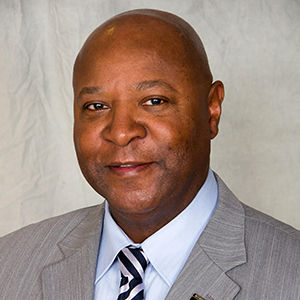
Senator James Manning (Senate President Pro Tempore, Oregon)
We’ve heard reports that Russia may have provided Iran with strategic information and that Iranian retaliation has included targeting facilities where U.S. personnel are stationed. I’m concerned about the risks faced by American troops deployed in a hostile region. Is there evidence of intelligence sharing between Russia, Iran, or other regional actors that could increase those risks?
Dr. Cook
Iran used the period after Operation Midnight Hammer in June 2025 to prepare for renewed conflict, learning from its earlier failures and expanding its targets beyond Israel to U.S. allies and military bases in the region. Russia provided satellite imagery to help Iran target U.S. forces in Bahrain, Qatar, the UAE, and Saudi Arabia, while China assisted with rebuilding Iran’s air defense systems.
The Strait of Hormuz and regional stability remain important U.S. interests because of global energy flows and access to critical resources. The United States has chosen to protect these global interests by maintaining a military presence and supporting freedom of navigation.

Senator Thomas Pressly (Vice Chair, Senate Labor and Industrial Relations Committee, Louisiana)
Is China’s support for Iran, including oil storage and military assistance, connected to broader U.S.-China competition in the Pacific, particularly regarding Taiwan? How does the deployment of significant U.S. naval forces to the Middle East affect American strategic priorities in Asia?
Dr. Cook
China has helped Iran rebuild its air defenses, but the drones attacking regional targets and shipping are domestically produced by Iran. U.S. naval deployments are globally distributed, with forces in the Middle East serving missions such as protecting freedom of navigation.
China is watching how the United States responds to challenges like the Strait of Hormuz because of parallels with the Taiwan Strait. By helping Iran maintain pressure in the Middle East, China may benefit from keeping U.S. military resources focused there rather than in East Asia. However, China is unlikely to replace the United States as the primary security provider in the region.

Senator Bill Ferguson (President of the Senate, Maryland)
What about the broader consequences of the conflict, including the indirect impact of oil price changes on states and economies? What about NATO’s potential role and what type of escalation could transform the current, largely contained conflicts into a much broader international crisis?
Dr. Cook
The conflict remains primarily regional but has global implications because of the involvement of major powers. NATO is unlikely to intervene in the Middle East because of internal divisions and limited European military capacity.
This conflict is already part of a broader global competition: Russia has supported Iran with intelligence, China benefits from U.S. attention being focused on the Middle East, and regional partners are reconsidering their reliance on U.S. weapons systems. Countries such as the UAE and Saudi Arabia are looking at alternative technologies, including systems developed by Ukraine, as they reassess their security needs.
The Iran conflict is creating broader global risks beyond immediate military concerns, with potential disruptions to critical resources such as helium, fertilizer, and energy supplies.

Speaker John Arch (Speaker of the Legislature, Nebraska)
What about Israel’s domestic political situation, considering that Prime Minister Benjamin Netanyahu’s governing coalition appears increasingly unstable? How does shifting political dynamics inside Israel affect the broader conflict and related policy decisions?
Dr. Cook
Israel’s current government became the first in nearly four decades to complete a full term, despite overseeing the country’s worst security failure. Elections are scheduled for October 27, and while Prime Minister Netanyahu remains a highly skilled political survivor, current coalition numbers do not give him a clear path to a majority.
Any new government would likely maintain similar positions on Gaza, Lebanon, and Iran, though there could be significant differences on West Bank policies and settlement issues. A change in leadership would likely bring a shift in tone, particularly in relations with Washington, but not a major change in Israel’s core security policies.

Senator Stuart Adams (President of the Senate, Utah)
What would you do about the situation with Iran? What is your prediction for the outcome?
Dr. Cook
U.S. strategy should focus on aligning goals with available resources. The 2015 nuclear agreement was based on the assumption that Iran’s government might change its behavior, but that assumption proved incorrect. However, military action alone is also risky and does not guarantee success.
An effective policy would focus on containing and deterring Iran, using diplomacy and targeted military action when necessary while recognizing that long-term change ultimately depends on the Iranian people. Effective strategy requires clearly defining U.S. interests, understanding available resources, and pursuing realistic objectives.
Senator Charles Schwertner (Chair, Senate Business and Commerce Committee, Texas)
The United States is the world’s largest oil producer, while Russia and Saudi Arabia produce less. Iran and China appear to be suffering greater economic consequences from the conflict than the United States. Despite warnings that a shutdown of the Strait of Hormuz could send oil prices to $200 or more per barrel, prices have remained relatively moderate. Why hasn’t the United Stated maintained a blockade or a sustained pressure campaign to impose greater costs on the Iranian regime and potentially force a change in behavior?
Dr. Cook
Disarming, disabling, and diminishing Iran is a legitimate policy goal, but using the Strait of Hormuz as a long-term pressure tool would have broader consequences.
Disarming, disabling, and diminishing Iran is a legitimate policy goal, but using the Strait of Hormuz as a long-term pressure tool would have broader consequences
Oil markets are influenced not only by available supply but also by market reactions and psychology. While the United States could absorb higher energy costs due to its wealth and production capacity, a prolonged blockade would create global instability, raising costs for countries such as India, Egypt, and the Philippines, which could ultimately affect the United States’ security interests.
A “forever blockade” would be counterproductive because Iran has shown it is willing to endure hardship and impose costs on others. Iran is not comparable to weaker adversaries, and without a willingness to commit ground forces the United States would struggle to achieve decisive results. China’s advance preparation—especially its stockpiling of energy supplies—has left it better positioned to withstand market disruptions.

Senator Cathy Kipp (Senate President Pro Tempore, Colorado)
What is the current mood of the Iranian people? Before the war, there were widespread protests and significant frustration with the regime. Has the conflict shifted public opinion more against the United States, or do many Iranians still want political change?
Dr. Cook
The honest answer is that we don’t know. Before the war, there was clear frustration and widespread protests in Iran, but the government has since restricted information and limited internet access, making it difficult to gauge public sentiment. It’s unclear whether the conflict has increased support for the regime, turned people further against the United States, or simply pushed dissent underground. The possibility of future unrest or regime change cannot be ruled out, but there is not enough reliable information to know the current mood of the Iranian people.
Senator Bill Ferguson (President of the Senate, Maryland)
Are the Iranians paying attention to the United States midterms?
Dr. Cook
Absolutely. Iranian leadership is closely watching U.S. politics and media, including outlets like CNN, Fox News, and MSNBC. Because the United States is an open society, the Iranians have a better understanding of our political dynamics than we have of theirs, given Iran’s more closed system.